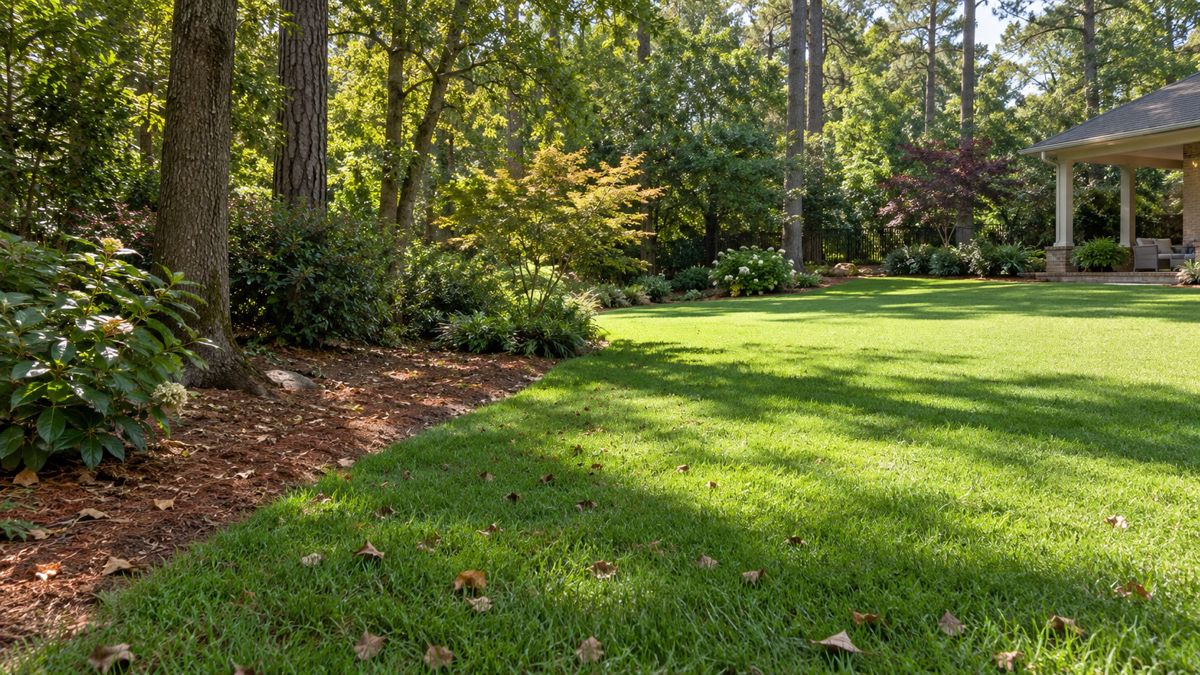
For most Birmingham lawns, the best choice is a warm-season grass such as Bermuda or zoysia in full sun, and tall fescue where trees cast heavy shade. Centipede and St. Augustine can work in some yards, but each has limits in north Alabama. Pick the grass by sun, soil and how you use the yard, then choose sod if you want a finished lawn quickly.
Here is how to sort through the options.
Why is Birmingham a tricky place to grow grass?
Birmingham has a humid subtropical climate. Summers are hot and wet, winters are mostly mild, and a few hard freezes show up most years. That puts the city in what turf experts call the transition zone. Warm-season grasses grow well in summer but can be hurt by a cold snap. Cool-season grasses stay green longer but can struggle in July and August.
The ground adds its own challenges. Much of the area has red clay, which drains slowly, packs down under foot traffic and is often acidic. Many lots are sloped and shaded by mature oaks and pines. A grass that thrives in a flat, sunny yard in south Alabama may not do well on a wooded hillside in Vestavia Hills.
So there is no one answer for every lawn. The right grass depends on four things: hours of sun, soil, slope and how much work you want to put in.
Which warm-season grasses grow well in Birmingham?
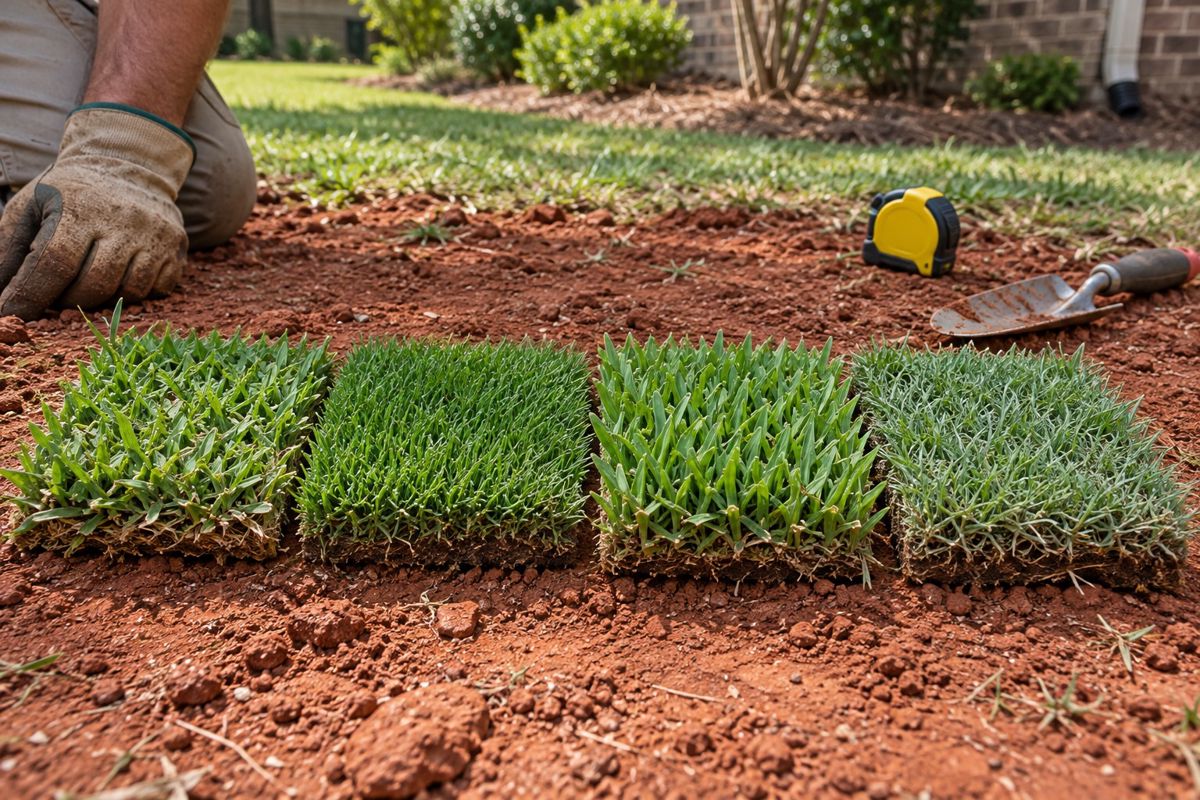
Warm-season grasses grow fastest in summer heat and go dormant, turning tan, after the first hard frosts. They green up again in spring. Here are the four you will hear about most.
Bermuda
Bermuda needs full sun, roughly eight hours a day or more. It is tough, spreads quickly and recovers well from wear, so it suits play areas and busy yards. It needs regular mowing and feeding to look its best, and it will creep into beds if the edges are not kept up.
Zoysia
Zoysia makes a dense, soft lawn that crowds out weeds. It handles some shade better than Bermuda. It is slow to establish from plugs, which is one reason many homeowners choose sod. It also turns tan in winter and needs a sharp mower blade.
Centipede
Centipede is a low-maintenance grass that likes acidic soil and needs little fertilizer. It has shallow roots, dislikes compacted clay and does not take heavy traffic well. It is better known in south Alabama, and cold winters can hurt it in the Birmingham area.
St. Augustine
St. Augustine tolerates shade better than most warm-season grasses and has a coarse, thick look. It is more common farther south, because hard winters in north Alabama can damage it. If you are thinking about it, ask a local supplier how it has done in your part of town.
What about tall fescue and shady lawns?
Tall fescue is a cool-season grass. It stays greener through winter and handles shade better than most warm-season choices, which is why it shows up in wooded Birmingham neighborhoods. The trade-off is summer heat. In a hot, dry July, fescue can thin out and need overseeding in the fall.
Deep shade is a problem for any turf. If the trees are dense and low, even fescue may fade. In those spots, consider shade-loving groundcovers, ferns or mulched beds instead of fighting for a lawn. You can also thin the tree canopy so more light reaches the ground, which helps every kind of grass.
Fescue is best planted in early fall, when the soil is warm and the air is cooler. That timing gives roots months to grow before the next summer.
Should you choose sod or seed?
Sod is grass that is already grown, cut in strips and laid like carpet. Seed is cheaper per square foot but takes longer, needs more watering and can wash away in heavy rain. Here are the main differences:
- Speed. Sod gives you a finished lawn the same day. Seed can take weeks or a whole season to fill in.
- Slopes. Sod covers the soil right away and helps stop erosion. Seed on a slope can slide in a downpour.
- Cost. Sod costs more up front. Seed costs less but may need reseeding.
- Weeds. Sod arrives dense, so weeds have a harder time getting started.
- Timing. Sod can be laid over a wider window of the year if the ground is not frozen.
Some grasses, like hybrid Bermuda and many zoysias, are grown mainly as sod because they do not produce seed that grows true. For those, sod is the practical choice.
How do you prepare the soil and care for new sod?
Good prep matters more than the grass variety. A reliable order looks like this:
- Remove old turf and weeds.
- Take a soil test. The Alabama Cooperative Extension System offers testing, and the results show whether you need lime or fertilizer.
- Loosen compacted clay and mix in compost or topsoil.
- Grade the area so water drains away from the house.
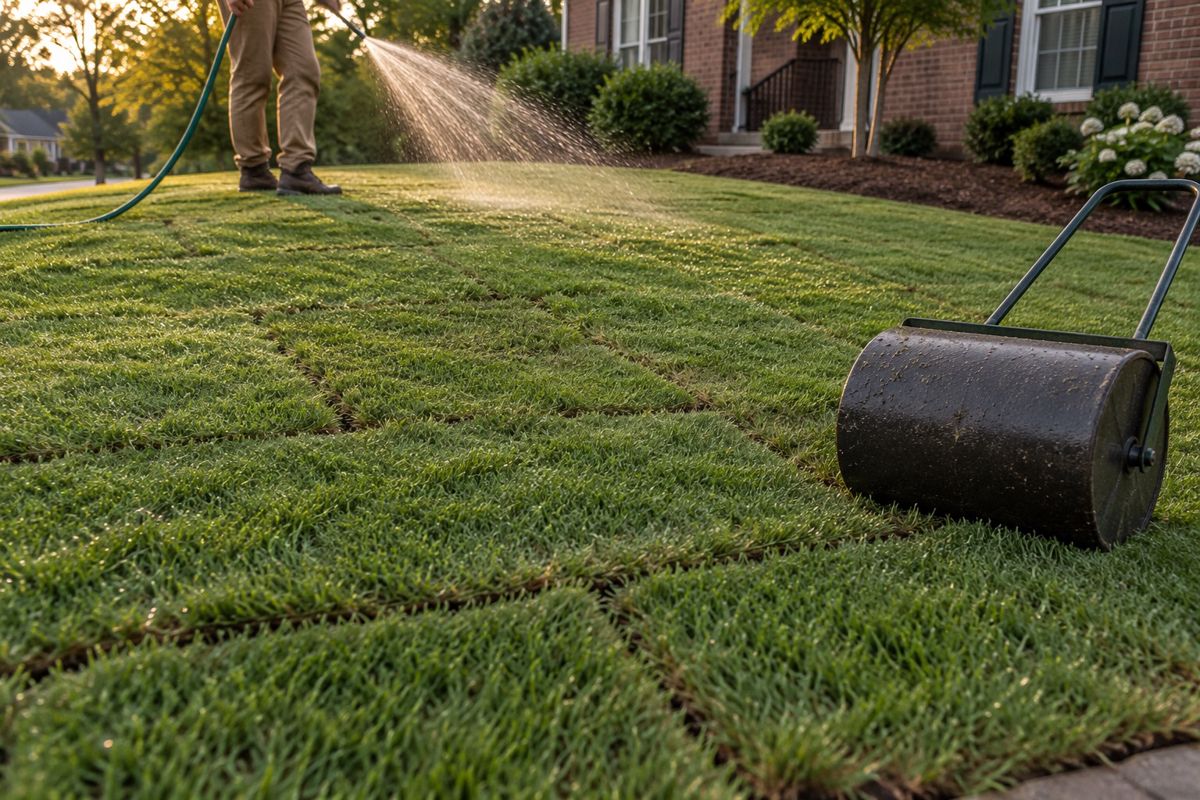
- Lay the sod in staggered rows with tight seams, and roll it so the roots touch the soil.
- Water right away and keep the soil under it damp every day at first.
After a few weeks, roots grow into the soil, and you can water less often but more deeply. Keep traffic off the lawn until the roots hold. Wait for the roots before the first mow, and do not cut more than about a third of the blade at once.
A sprinkler system takes the guesswork out of those first weeks. See our page on sprinkler system installation if you want to put one in before the sod goes down.
How high should you mow each grass?
Mowing height changes how deep roots grow and how well the lawn handles heat. These are rough guides, so check with your sod supplier for the exact variety:
- Bermuda: about 1 to 2 inches.
- Zoysia: about 1.5 to 2.5 inches.
- Centipede: about 1.5 to 2 inches.
- St. Augustine: about 3 to 4 inches.
- Tall fescue: about 3 to 4 inches.
Keep blades sharp, and leave clippings on the lawn when they are short. They return nutrients to the soil.
When should you call a landscaper about sod?
Call when your lawn is more weeds than grass, when shade and compacted clay have beaten several rounds of seed, or when a slope keeps washing out. A site visit can sort out sun, soil and drainage before you spend money on the wrong variety. If runoff is the real problem, you may need a drainage fix first, and our retaining walls and drainage page explains how that works.
When you are ready for a fresh lawn, read about sod installation in Birmingham and describe your yard, with photos if you can. We will tell you what looks like the best fit for the light and soil you have.