Skip to content
  • Free written quotes
  • Local crews
Birmingham, AL (205) 555-0168
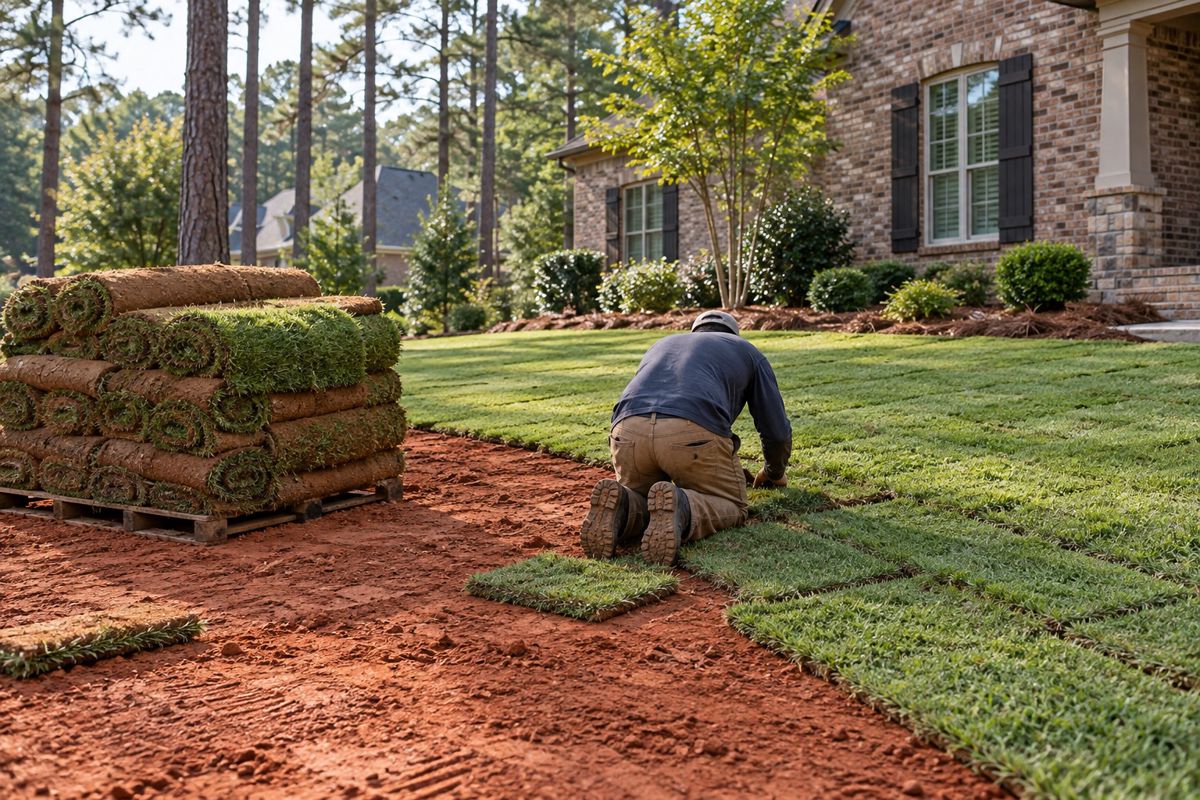
Worker kneeling to lay staggered rolls of green sod over graded soil

Sod installation in Birmingham, AL

Sod installation in Birmingham for a lawn that actually holds

Replace a thin or weedy lawn with fresh sod chosen for your sun, shade and soil, laid on ground that has been properly prepared.

  • Grass matched to sun and shade
  • Soil prep for compacted red clay
  • Care instructions for the first weeks

Step 1 of 3

What do you need?

What does sod installation in Birmingham involve?

Sod installation means removing the old lawn if needed, preparing the soil, and laying rolls of live grass tightly together. The yard looks finished the same day, and the roots grow into the soil over the next few weeks. Sod is a good option on slopes, because it stops erosion much faster than seed can.

Most of the success is in the prep. In Birmingham, that usually means loosening compacted clay, adding compost or topsoil, and grading so water drains away from the house. If the yard has bigger drainage issues, deal with them first with drainage solutions. A new lawn also does better when a sprinkler system is in place before the sod goes down.

Which grass should you choose for Birmingham sod?

Birmingham sits in a transition area, so both warm-season and cool-season grasses are grown here. The right choice depends on your light and how you use the lawn.

  • Bermuda. Needs full sun. Tough, fast to spread and good for play areas. It turns tan in winter.
  • Zoysia. Dense and soft, with some shade tolerance. Slower to establish and also goes dormant in winter.
  • Centipede. Low maintenance, but it dislikes compaction and has limits in colder winters.
  • St. Augustine. Handles shade, though hard winters in north Alabama can damage it.
  • Tall fescue. A cool-season grass that stays greener in winter and takes shade, but can thin in hot summers.

A site visit tells us how many hours of sun each part of the yard gets, which matters more than any chart.

How is a lawn prepared before sod goes down?

Prep follows a simple order:

  1. Remove the old turf and weeds, or kill them first if you are laying over a poor lawn.
  2. Test the soil. The Alabama Cooperative Extension System offers soil testing, and results show whether lime or fertilizer is needed.
  3. Loosen compacted clay and work in compost or topsoil.
  4. Rough grade the area so water runs away from the house and does not pool.
  5. Roll the surface smooth and lightly moisten it before the sod arrives.

Sod is perishable. It should go down the day it is delivered, laid in staggered rows with tight seams and rolled to press roots against the soil. On steep banks, pins or stakes may hold it in place until it roots.

Price depends on the following:

  • Square footage of the lawn.
  • Grass type, since some varieties cost more than others.
  • Removal and disposal of the old lawn and any stumps or debris.
  • Soil work, grading and amendments.
  • Slope and access for equipment and pallets.

Most residential lawns can be laid in a day or two once the ground is ready. Prep adds time, and rain can delay the work because sod on soggy clay does not settle well. On installation day, expect pallets of sod, a skid steer or hand carts, and some noise. Keep pets and kids off the new lawn until it roots.

When should you lay sod, and how do you care for it?

Warm-season sod does best when laid from late spring through summer, when soil is warm. Cool-season sod like fescue does well when laid in early fall. Sod can be laid in other seasons if the ground is not frozen, but it roots slowly in cold weather.

Water is the most important part of care. New sod needs moist soil under it every day at first, then less often as roots grow. Hot, dry spells may need more. Stay off the lawn for the first couple of weeks, and wait until it roots before the first mow.

Call when your lawn is more weeds than grass, or when shade and compacted soil have beaten seed. You can see more services on the home page.

How it works

  1. Step 1

    Tell us about the yard

    Size, goals and any photos.

  2. Step 2

    Site visit and quote

    We walk the property and put the price in writing.

  3. Step 3

    We do the work

    Scheduled crew, cleanup included.

Free written quotes Local crews Reliable scheduling Tidy job sites

Request sod installation

Tell us what you need and we call you back.

Step 1 of 3

What do you need?

No obligation.

Questions about landscaping in Birmingham

What is the best sod for Birmingham, AL?

There is no single best grass. Bermuda and zoysia are common in sunny yards, and tall fescue is often chosen for shade. Centipede and St. Augustine are used in some lawns but have limits in north Alabama. The right pick depends on sun, soil and how you use the yard.

How long until I can walk on new sod?

Light foot traffic for watering is fine, but keep play and heavy use off the lawn until the roots hold. That usually takes a couple of weeks, depending on weather and grass type. You can tug a corner gently. If it resists, the roots are taking hold.

Can sod be laid over my existing lawn?

It is better to remove the old grass and weeds first. Sod laid over thick turf or hard clay roots poorly and may dry out in patches. Taking off the old layer and loosening the soil gives the new roots a clean start.

How much water does new sod need?

It needs steady moisture in the first weeks. The soil under the sod should stay damp, not soaked. After roots form, cut back to deeper, less frequent watering. A sprinkler system with a timer makes this much easier, especially in hot summers.

Is sod better than seed for slopes?

Often, yes. Heavy rain can wash seed down a slope before it sprouts, while sod covers the soil right away. Steep banks may still need pins or erosion control. If the slope is very steep, a retaining wall or terraces may be a better answer than turf alone.

Why does my lawn struggle under trees?

Shade, root competition and compacted soil all work against grass. Some varieties tolerate shade better than others, but none thrive in deep shade. Thinning the canopy, switching to groundcover or planting shade beds can work better than repeated reseeding.

Ready when you are

Call now or request a quote online.

(205) 555-0168
Takes about 30 seconds. Get my free landscaping quote