Skip to content
  • Free written quotes
  • Local crews
Birmingham, AL (205) 555-0168
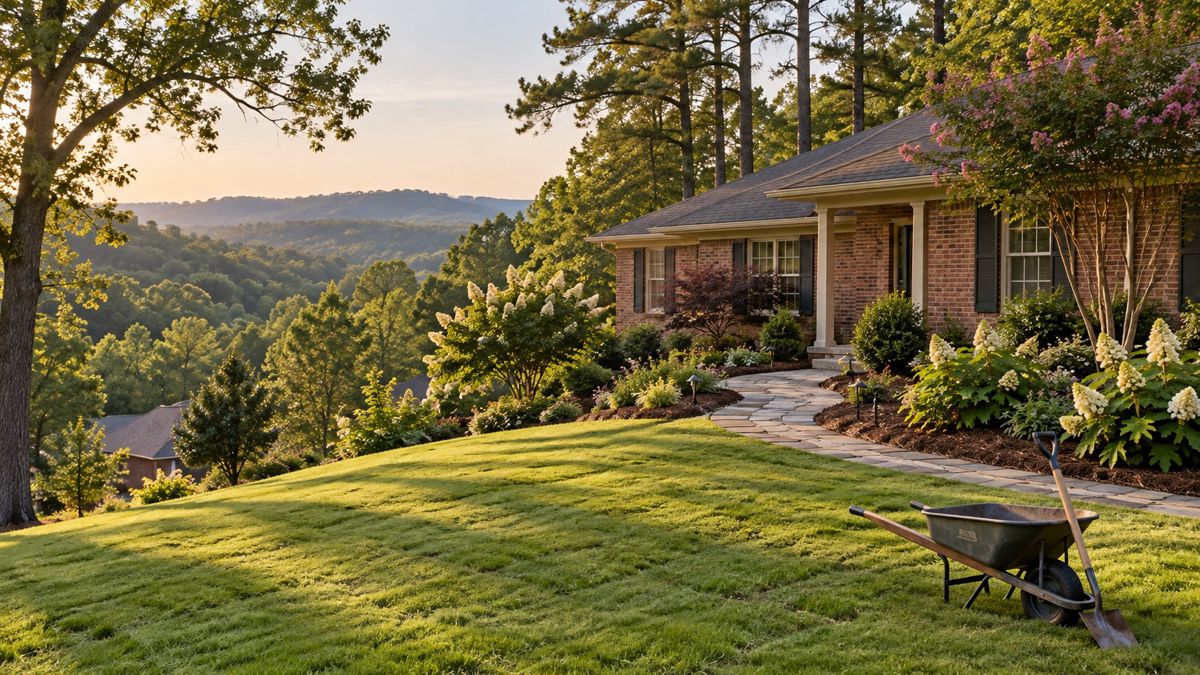
Landscaped brick home with a sloped lawn, mulched beds and mature trees

Newer subdivisions, builder lawns and HOAs

Landscaping in Hoover, Alabama

Sod, irrigation, patios and drainage for Hoover homes, from Riverchase to Ross Bridge. Request an estimate and we will confirm availability.

  • Built for hills, clay and summer storms
  • Written quote before work starts
  • Five services, one local crew

Free written quotes Local crews Reliable scheduling Tidy job sites

Hoover homes that need more than builder landscaping

Hoover is one of the larger suburbs south of Birmingham, with many neighborhoods built over the last few decades. In newer subdivisions, the house often arrives with a thin layer of topsoil over compacted clay, a basic lawn and a few shrubs along the foundation. Owners tend to call once they notice what that really means: patchy turf, puddles in the yard and bare areas that never filled in.

Fixing those problems usually starts underground, with soil and water, rather than with plants.

Clay under thin topsoil is the usual explanation.

Local conditions vary from one subdivision to the next.

I-65, Highway 31 and the pattern of Hoover streets

I-65, I-459, Highway 31 and Highway 150 tie Hoover together, and neighborhoods such as Riverchase, Inverness, Greystone and Ross Bridge each have their own character. Many streets are curved and quiet, with deep driveways and sidewalks.

Newer lots are often graded by the builder so that water leaves the house, but the final slope can send runoff across a neighbor's yard or into a low corner. HOA covenants may also control fence styles, plant lists and the look of front yards, which is why we ask for any rules before planning a project.

Our five services as they apply to Hoover

Most Hoover projects combine two or three of these.

Because Hoover homes vary so widely, we can scope a single front yard refresh, a back yard overhaul, or both, and keep the estimate itemized so you see what each piece involves.

Hoover sits in the transition zone, where warm-season grasses such as Bermuda and zoysia and cool-season fescue can all grow, each with trade-offs. Which is right depends on sun, use and how much work you want to put in.

  • Compacted fill. Heavy equipment during building packs the soil, so roots struggle.
  • Poor drainage. Clay holds water, and turf rots in low spots.
  • Wrong grass for the light. Sun-loving types thin out in shade.

A soil test through the Alabama Cooperative Extension System is a sensible first step.

Fixing soil first, then planting, is almost always cheaper in the long run than replacing failed turf twice.

HOA approvals, backflow devices and water rules

Many Hoover neighborhoods require approval for fences, patios and some planting changes. Submit the plan before work starts and keep the approval letter. An irrigation system also needs a backflow preventer on the water line, and the city or water provider may have rules on installation and inspection.

Call Alabama 811 before any digging. Irrigation lines, fire pit gas lines and drain pipes are all affected by buried utilities, and marking them first prevents expensive mistakes.

Keep a copy of the approval letter in your files, since associations sometimes ask for proof long after the work is done.

What happens after a Hoover estimate request

Send the form or call (205) 555-0168. We serve Hoover and use your request to check our schedule.

  1. Tell us whether you want a new lawn, a patio, drainage work, or a full plan.
  2. Share photos of problem areas, plus a plat or sketch if you have one.
  3. Mention your HOA and its requirements.
  4. We ask follow-up questions and visit the property.
  5. You receive a written estimate with materials, steps and exclusions.

If an association review is still pending, tell us, and we will describe what can start now and what must wait.

Get a quote in Hoover

Tell us what you need and we call you back.

Step 1 of 3

What do you need?

No obligation.

Questions about Hoover

Why does my new Hoover lawn have bare patches?

Common causes are compacted clay, thin topsoil, shade, uneven watering or the wrong grass type. Builders often prepare ground for appearance, not long-term growth. We look at soil, light and water before suggesting new sod or seed. Sometimes aerating and adding topsoil is enough, and sometimes a complete reset is the better route.

Which grass should I choose for a Hoover yard?

It depends on sun and use. Bermuda and zoysia like full sun and go tan in winter, while fescue stays green longer but struggles in hot summers and needs more water. Shady yards may suit fescue or a mixed approach. We discuss maintenance and appearance before recommending sod. Each choice has costs and benefits.

Do I need HOA approval for a patio or fire pit?

Often. Many associations review patios, fences, outbuildings and sometimes plantings, and they may limit fire features. Read your covenants and submit drawings or a sketch before work starts. We can provide a description of materials and dimensions to support your application. Local conditions decide the outcome in the end, which is why a site visit matters before we suggest sod or seed.

How do I fix standing water in my yard in Hoover?

Start by finding the source. Roof runoff, a low spot, or water coming from a neighbor's higher lot are common culprits. Solutions include regrading, French drains, catch basins and extending downspouts. Clay soil makes drainage slow, so the fix often involves moving water instead of waiting for it to soak in. Each cause has a different fix.

How often should sprinklers run on clay soil?

Clay absorbs slowly, so shorter cycles repeated with rest between them reduce runoff and let water soak in. Most lawns do better with deep, less frequent watering than daily sprinkling. Settings should change with season and rainfall. We explain the controller and leave simple notes so you can adjust it. Seasonal changes to the schedule are normal.

Ready when you are

Call now or request a quote online.

(205) 555-0168